East Coast
From Belle Mare to Trou d'Eau Douce, the east coast offers the island's widest lagoon, swept by trade winds and sheltered from mass tourism.
Mauritius's east coast stretches for some forty kilometers, from Roches Noires in the north to Pointe d'Esny in the south, passing through Poste Lafayette, Belle Mare, Palmar, Trou d'Eau Douce and Bambous Virieux. This is the shoreline facing the sunrise and the south-east trade winds, which explains two defining characteristics we consistently highlight to our travelers: a very wide lagoon protected by a coral reef distant from the shore, and a windier climate than the west coast, especially between June and September.
Historically, this coast long thrived on sugar cane and village fishing. Crossing the hinterland between Centre de Flacq and Bel Air Rivière Sèche, you still pass cane fields, a few chimneys of former mills like Beau Champ's, and Tamil temples that recall the history of Indian indentured labor in the 19th century. Centre de Flacq market, Wednesday and Sunday mornings, remains one of the island's most vibrant for seasonal fruit, fresh fish and spices.
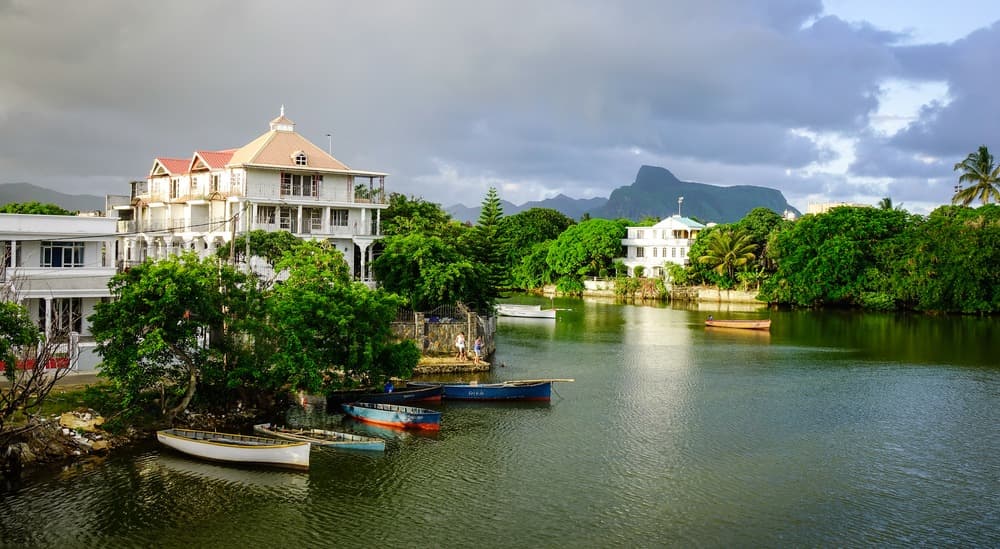
Hotel density is real here, but without the concentration of Grand Baie or Flic en Flac. Resorts dot the B59 coastal road, separated by stretches of public beach, as at Belle Mare or Palmar. Between complexes, fishing villages remain, notably Trou d'Eau Douce, where pirogues set out from 6am to haul in traps and roadside snacks serve vindaye fish, curried octopus and chili cakes.
The lagoon from Belle Mare to Palmar is one of the island's widest, shallow for hundreds of meters, making it navigable for children and for wading waist-deep. Further south, past Trou d'Eau Douce, you enter Grande Rivière Sud Est bay, where the landscape shifts: the river mouth, the Grande Rivière Sud Est waterfall accessible by boat, and pockets of mangrove announcing the wilder south-east around Bambous Virieux and Île aux Aigrettes.
Île aux Cerfs, a ten-minute pirogue ride from Trou d'Eau Douce, remains the region's most celebrated excursion. We recommend visiting on weekdays and before 10am to avoid crowds, or opt for neighboring Îlot Mangénie, accessible only to certain hotel guests but far quieter. Golf enthusiasts will find three of the island's finest courses here: Belle Mare Plage (Legend and Links) and Anahita Ernie Els.
On the dining front, the region has gained ground in recent years. We regularly send our travelers to Seven Colours in Trou d'Eau Douce for creative Mauritian cuisine at reasonable prices, to Bistrot 1771 for grilled fish with sand between your toes, or to guesthouses around Quatre Cocos to discover Sino-Mauritian cooking with mine frites, dumplings and niouk yen.
To Discover
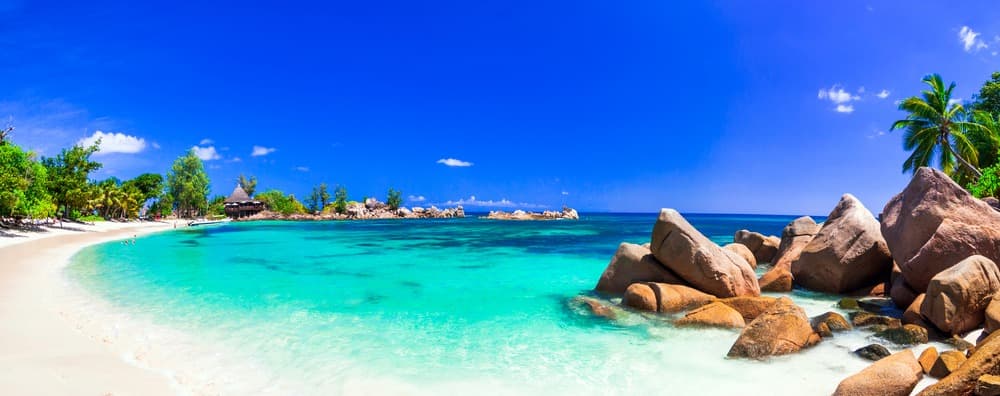
Belle Mare to Palmar Lagoon. Eight kilometers of white sand beach facing the open sea, with a turquoise lagoon navigable on foot for 300 to 500 meters. Ideal for families and shallow-water wading.
Île aux Cerfs from Trou d'Eau Douce. A ten-minute pirogue crossing to a 100-hectare island with shaded beaches and a golf course. We recommend departing before 9am to stay ahead of tour groups.
Grande Rivière Sud Est Waterfall. Boat journey up from the river mouth to a twenty-meter cascade, framed by basalt cliffs and mangroves. Often combined with Île aux Cerfs over half a day.
Centre de Flacq Market. Wednesday and Sunday mornings, one of the island's liveliest markets. Lychees in December, Victoria pineapples, warm chili cakes and stalls of fish hauled from the lagoon that very morning.
Golf at Anahita and Belle Mare. Three 18-hole courses designed by Ernie Els and Hugh Baiocchi, two of them lakeside. The region concentrates Mauritius's densest golf offering.
When to Go
The east coast is most exposed to south-east trade winds. From May to October, wind blows regularly at 15 to 30 km/h, cooling the air to 22-25°C during the day but potentially disrupting afternoon swimming. It is, however, the prime season for kitesurfing, notably at Anse La Raie and Poste Lafayette. From November to April, air climbs to 28-32°C, wind eases, but January and February concentrate most rainfall, with real cyclone risk between mid-January and mid-March.
Our favorite windows for this coast are April-May and September-October: temperatures still warm (26-29°C), rare rain, moderate wind, clear lagoon. Note that the east coast is consistently windier than the west coast in the same season, which can be an asset in austral summer to escape humidity, and a drawback in winter for visitors who feel the cold.
Practical Tips
The east coast is reached in 45 minutes from SSR Plaisance airport via highway, and in roughly 1h15 from Port Louis. We recommend spending 4 to 6 nights here if it's your sole base, leaving time to alternate beach days, an Île aux Cerfs excursion, golf or a catamaran to north-east islets (Île d'Ambre, Île aux Bernaches), and an inland day toward Bois Chéri and Tamarind Falls. The region naturally combines with the wild south for those seeking to alternate calm lagoon and windswept coast (1h15 drive to Bel Ombre), or with the center and plateau for a cooler day at altitude in Curepipe or the Black River Gorges national park. The traveler profile that thrives here best: couples seeking tranquility, families with young children thanks to the shallow lagoon, golfers, and those who favor a single quality hotel-resort over a mobile itinerary. For a first discovery blending beach and exploration, we suggest pairing 4 nights on the east coast with 3 nights on the west or south coast.