Sir Seewoosagur Ramgoolam Botanical Garden
Sir Seewoosagur Ramgoolam Botanical Garden
In Pamplemousses, the oldest botanical garden in the Southern Hemisphere brings together 37 hectares of three centuries of plant collections and colonial heritage.
The Sir Seewoosagur Ramgoolam Botanical Garden, located in Pamplemousses in the north of Mauritius, spans 37 hectares about fifteen kilometers from Port-Louis. Often called the SSR Botanical Garden or Pamplemousses Garden, it houses collections of tropical trees and plants accumulated since 1736, making it one of the oldest botanical gardens in the Southern Hemisphere.
Why visit the Pamplemousses botanical garden
The site combines three main interests. First, a botanical collection assembled over nearly three centuries, featuring species brought from around the world by successive administrators. Next, built heritage inherited from the French and British colonial period: château, obelisk, wrought-iron gate, bridge. Finally, a landscape setting that can be explored in a few hours, in close proximity to the capital, making it a logical stop for those traveling through the north of the island.
History enthusiasts will find here a condensed narrative of Mauritian history, from the era of the Indies Companies through independence in 1968. Visitors interested in nature will linger over the Victoria Amazonica water lilies, baobabs, and numerous varieties of palms.
Garden history
The site's origins trace back to 1736, when Mahé de Labourdonnais, then governor of the Isle of France, had a vegetable garden created to supply his residence and the neighboring city. Proper botanical development came thanks to Pierre Poivre, a French botanist and colonial administrator, who transformed the vegetable garden into an acclimatization garden from the 1760s onward. Poivre introduced species from his travels: Caribbean laurel, breadfruit from the Philippines, cassava from Brazil, Malabar cinnamon, as well as nutmeg and clove—spices he sought to remove from Dutch monopoly.
The garden then came under the direction of Jean-Nicolas Céré in 1775, who continued introducing new species, followed by Scottish professor James Duncan in 1849, under British administration. Each period added collections, planted avenues, and structured the park.
Who was Sir Seewoosagur Ramgoolam?
The garden took its current name in 1988, honoring Sir Seewoosagur Ramgoolam, considered the "Father of the Mauritian Nation." A leader of the independence movement, he served as Prime Minister and then Governor-General of Mauritius, playing a central role in the country's path to independence in 1968.
What to see on site
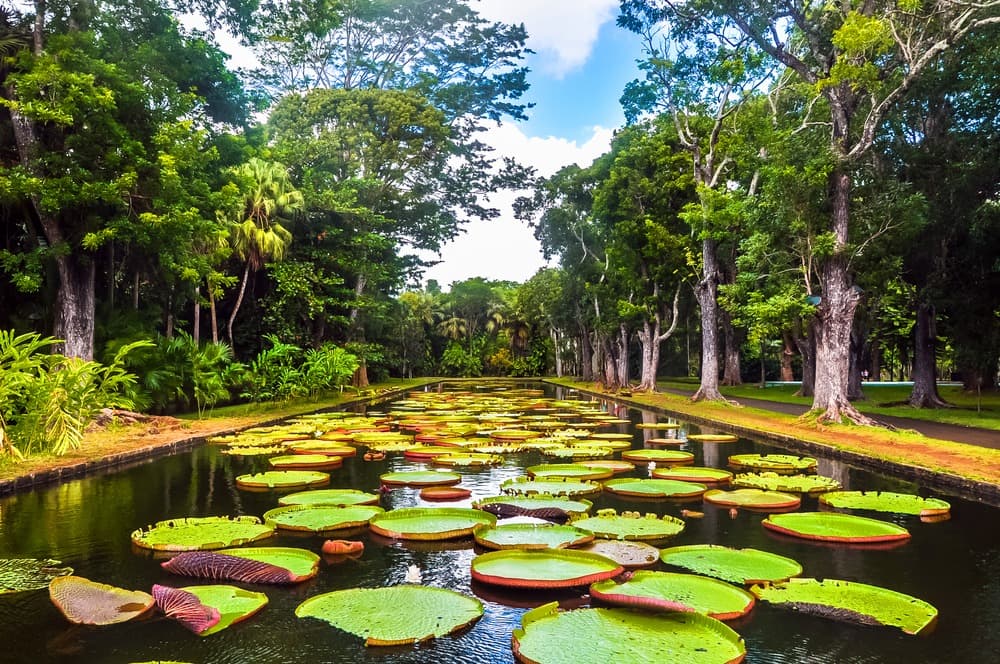
The Victoria Amazonica water lily pond
This is the image most associated with the garden. The circular leaves of these giant water lilies, native to the Amazon, can reach two meters in diameter. Local tradition claims their leaves can support a child's weight—a claim to take with caution. The white flowers, however, bloom at night and change color within days.
The plant collections
Several areas deserve a stop: the palm tree avenue (palmists, talipots, royal palms), baobabs, spice trees (clove, nutmeg, cinnamon), as well as trees planted by foreign dignitaries on official visits—Princess Margaret, Indira Gandhi, François Mitterrand, and Robert Mugabe. Near the northern exit, an enclosure houses deer and Aldabra giant tortoises. Among bird species, the Madagascar fody, a small bird with crimson plumage, is easy to spot.
Monuments and built heritage
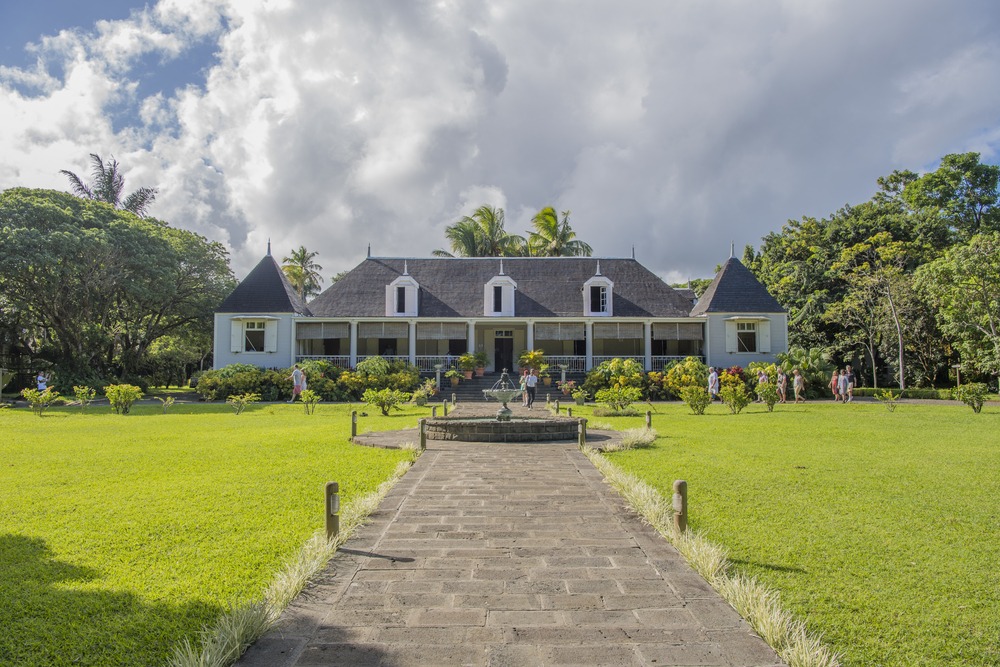
The Mon Plaisir Castle, a former residence of the garden's superintendent, built on the site of Labourdonnais's former home. It is classified as National Heritage.
The Liénard Obelisk, in white marble, offered in 1861 by François Liénard de la Mivoye in tribute to those who contributed to the island's natural heritage. Classified as National Heritage in 1958.
The Wrought-iron gate of the main entrance, also a gift from Liénard, displayed at the Crystal Palace Exhibition in London in 1862.
The Bridge of Sighs, a work from the French colonial period.
A sugar refinery dating from 1953, designed as a reproduction of old refineries to illustrate traditional processes.
Practical information
Allow two to three hours to tour the main areas without hurrying. The park is open daily during daylight; entrance fees for foreign visitors remain modest, with a potential supplement for guided tours. Check current hours and prices before your visit, as they may change.
Wear closed-toe shoes (the paths are long), bring a hat, water, and sunscreen. A guided tour by a local botanist is recommended to identify species and understand the historical context: only a few trees are labeled.
When to visit
The garden can be visited year-round, as Mauritius's tropical climate remains enjoyable in all seasons. The most pleasant period covers the Southern winter, from May to October, with milder temperatures and lower humidity. Summer (November to April) is hotter and subject to tropical showers; in return, vegetation is at peak exuberance and the Victoria Amazonica water lilies bloom more spectacularly. Prefer mornings to enjoy the light and avoid heat.
How to get there
The garden is located about 11 km northeast of Port-Louis, in the village of Pamplemousses. By rental car, allow about twenty minutes from the capital via the M2, with ample parking at the entrance. From Grand Baie or Trou aux Biches, the journey takes 20 to 30 minutes depending on traffic.
By public transport, buses regularly connect Port-Louis (Immigration Square) to Pamplemousses; the stop is a 10–15 minute walk from the gate. Taxis and ride-sharing services also operate from most beach resorts in the north.
Nearby
The north and center of Mauritius offer several worthwhile extensions to a garden visit. Port-Louis and its central market are about twenty minutes by car. Further south, the Domaine des Aubineaux and Domaine de Saint Aubin continue the colonial and agricultural theme with plantation homes open to visitors. For a nature-focused day, Terre des sept couleurs in Chamarel showcases the island's unique geology, while Lion Mountain offers a panoramic hike to the southeast. History enthusiasts can complement their visit with the National Museum of History in Mahébourg.
Frequently asked questions
Frequently asked questions
Allow two to three hours to walk through the main areas (palm avenue, Victoria Amazonica pond, monuments, tortoise enclosure). A half-day allows for a more contemplative visit.
Yes, highly recommended. Few trees are labeled, and a botanist guide provides historical and scientific context. Independent guides wait at the entrance or can be booked in advance.
The main pathways are flat and drivable, allowing for a partial visit by wheelchair. Some secondary sections are on unpaved terrain or have exposed roots.
Victoria Amazonica flowers bloom year-round in Mauritius but are particularly spectacular during the Southern summer, from November to April. The white flowers open at night and turn pink the next day.
Yes, without difficulty. Pamplemousses is about twenty minutes by car from the capital. A morning at the garden and an afternoon at the central market and Caudan Waterfront form a typical itinerary.
Plan your trip
The botanical garden fits naturally into a circuit through northern Mauritius. To build a complete itinerary including heritage, beaches, and nature, consult our custom voyages to Mauritius.
Interested in this visit?
We can include it in your personalised itinerary.