Pamplemousses
Pamplemousses
Pamplemousses is home to the celebrated Sir Seewoosagur Ramgoolam Botanical Garden, one of the oldest in the southern hemisphere, featuring giant water lilies, a rare palm grove and an 18th-century colonial castle.
Pamplemousses is a village in the northwest of Mauritius, famous for hosting the Sir Seewoosagur Ramgoolam Garden, one of the oldest botanical gardens in the southern hemisphere. Founded in the 18th century, this site blends colonial history, tropical biodiversity and heritage architecture. The village itself, peaceful and little-visited by tourists, offers an authentic contrast to the nearby beach resorts in the north.
Quick Practical Information
- Admission: The SSR Garden is paid for non-residents; free for Mauritian residents.
- Suggested duration: 1.5 to 2 hours for the botanical garden.
- Dress code: Casual attire suited to tropical heat; closed-toe shoes recommended on the pathways.
- Access: Bus from Port-Louis (northern line) or Grand Baie; car rental advised to combine multiple sites.
- Accessibility: Main pathways accessible by wheelchair; some secondary areas not adapted.
What to See
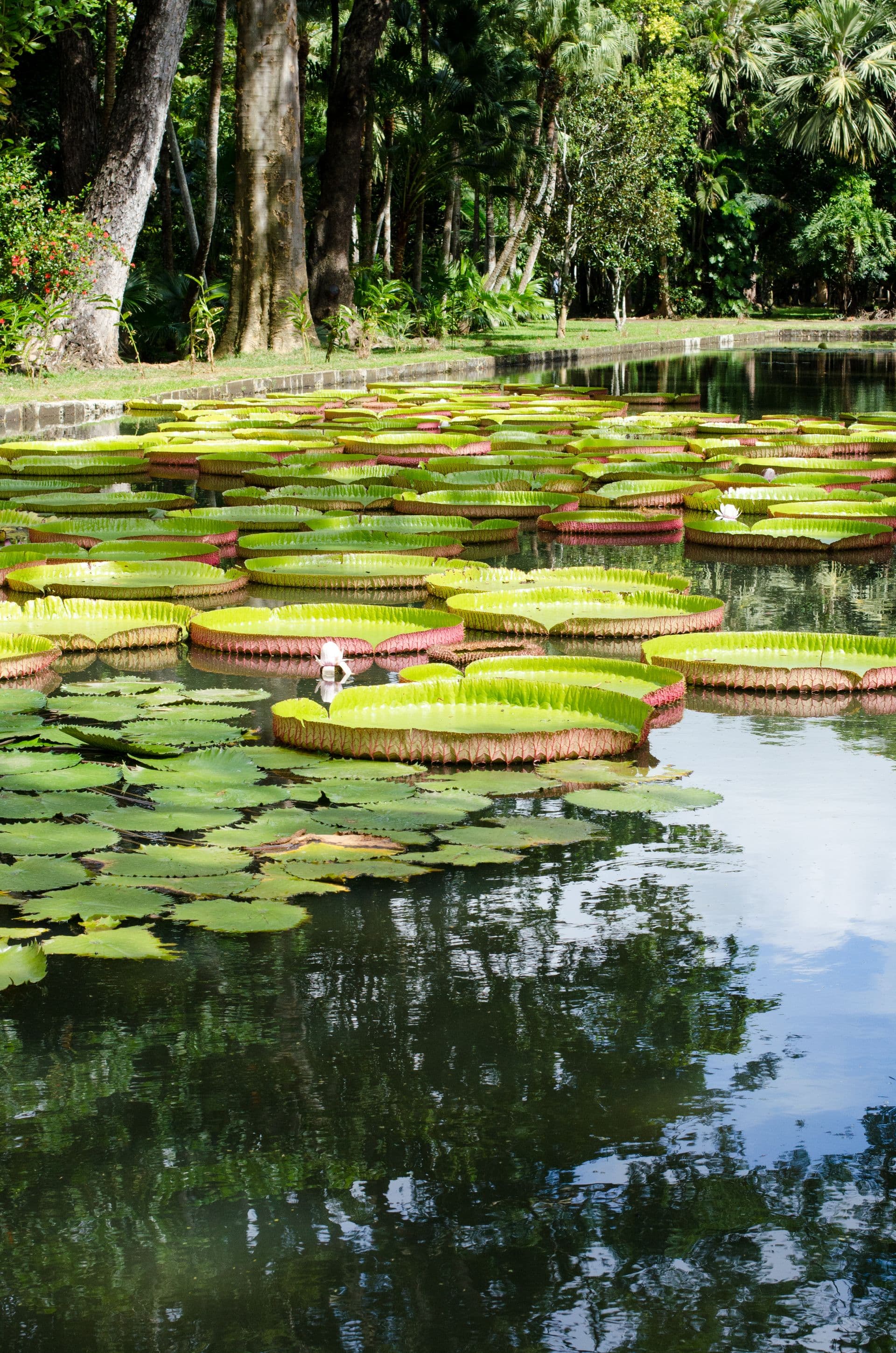
The Sir Seewoosagur Ramgoolam Garden spans around forty hectares. It is primarily known for its giant Victoria amazonica water lilies, whose leaves can exceed one meter in diameter. There is also a collection of rare palms, spice trees, banana plants, giant bamboos and a pond with giant tortoises.
Immediately adjacent to the garden stands the Church of Saint Francis of Assisi, a colonial building from the 18th century, and the Mon Plaisir Castle, a former residence of French governor Mahé de La Bourdonnais, now integrated into the garden estate.
History and Context
The Pamplemousses botanical garden was created around 1735 at the initiative of Mahé de La Bourdonnais, then governor of the Isle of France (the colonial name for Mauritius). Pierre Poivre, a French administrator passionate about botany, greatly enriched it in the second half of the 18th century by introducing Asian spices—cinnamon, nutmeg, cloves—to break the Dutch monopoly.
Under British administration, the garden was restructured and enlarged. Today it bears the name of Mauritius's first independent Prime Minister, Sir Seewoosagur Ramgoolam.
Highlights of Your Visit
The Giant Water Lilies
The Victoria amazonica pond remains the main attraction. These water lilies from the Amazon produce circular leaves with raised edges, capable of supporting a child's weight. The nocturnal flowering, white then pink, is less visible during daytime visits.
The Palm Grove
The garden houses one of the most diverse palm collections in the Indian Ocean: bottle palm, royal palm, talipot (which flowers only once in its lifetime) and several species endemic to the Mascarene Islands.
Mon Plaisir Castle
This white colonial residence, sober and elegant, marks the garden's main entrance. Interior visits are not always available, but its façade and landscape setting are worth seeing.
The Church of Saint Francis of Assisi
Just across from the garden, this Catholic church built in the 18th century is among the oldest in Mauritius. Its ochre façade and squat bell tower bear witness to French colonial architecture.
Photography Tips
Morning light (before 10 a.m.) is ideal: it is soft, the pathways are uncrowded and reflections on the water lily pond are sharp. Bring a telephoto lens or zoom to frame details of the giant leaves without disturbing the banks. Mon Plaisir Castle photographs well from a low angle along the central pathway.
Location and Access
Pamplemousses is located about fifteen kilometers north of Port-Louis and approximately 10 kilometers south of Grand Baie. The B48 road runs through the village. By bus from Port-Louis (North Station), the line serves Pamplemousses directly. By car, the parking in front of the garden is accessible and generally available on weekdays.
Nomadays offers guided tours combining Pamplemousses with other sites in the north of the island.
Around the Area
- Port-Louis — capital of Mauritius, about fifteen kilometers away: markets, museums and bustling waterfront.
- Grand Baie — northern beach resort, about ten kilometers away: beaches, restaurants and water sports.
- Cap Malheureux — fishing village in the north, known for its red church facing the islet of Coin de Mire.
- Domaine Les Pailles — colonial estate south of Port-Louis, with sugar cane mill and carriage rides.
Frequently asked questions
The dry season (May to November) is the most pleasant: moderate heat and low humidity. The giant water lilies are present year-round, but their development is optimal in the southern summer (December-March).
Allow 1.5 to 2 hours to walk the main pathways, the water lily pond and the palm grove. Add 20 to 30 minutes if you wish to visit the neighboring church.
Yes, the two sites are about ten kilometers apart. A morning at Pamplemousses followed by an afternoon at Grand Baie is a common and realistic itinerary.
Personal photography is allowed throughout the garden. Commercial or professional use may require prior authorization from the site management.
The main pathways are wide and accessible by wheelchair. Some secondary trails and grassy areas remain difficult to access. It is advisable to inquire at the entrance for an adapted route.
Independent guides offer their services at the garden entrance. Their services are paid and negotiable directly. Local agencies such as Nomadays can also organize a guided visit as part of a northern island circuit.
Want to discover this destination?
Our local advisors design your tailor-made trip.