Chamarel
Chamarel
In the southwest of Mauritius, Chamarel conceals a land of seven colors, a 100-meter waterfall, the birthplace of Seggae, and authentic Creole cuisine.
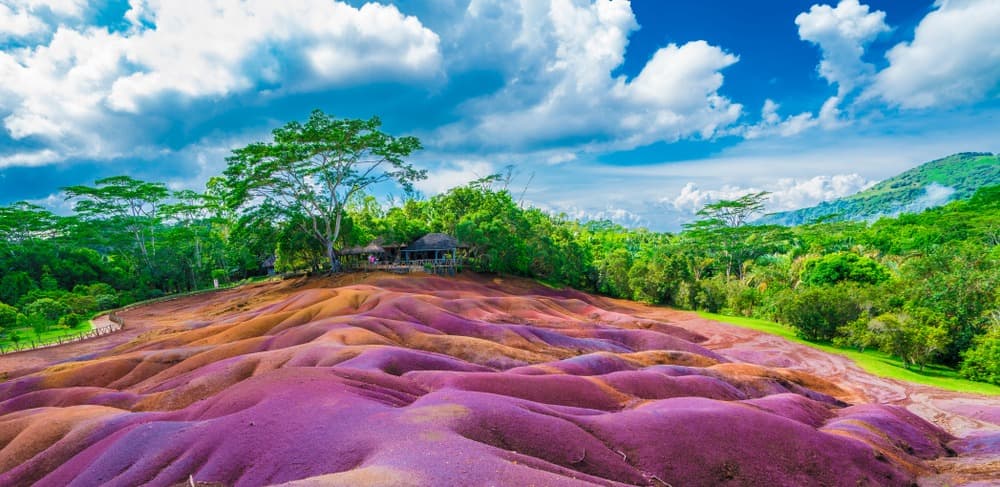
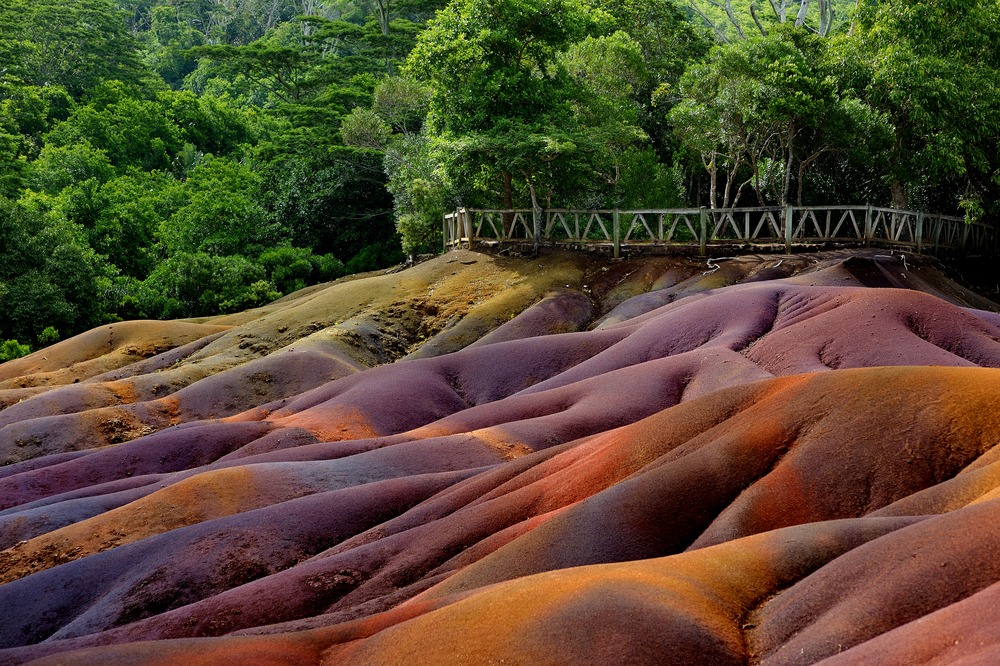
Chamarel is a small village located in the southwest of the Island of Mauritius. A celebrated tourist destination, it is home to an internationally renowned natural site: the Land of Seven Colors. Amid lush vegetation, never blending together, brown, orange, yellow, pink, mauve, red and ochre hues sit side by side in layers to reveal a rare geological wonder. Not far from this space are other attractions: the Chamarel Waterfall, the Adventure Park, the Curious Corner Museum, the Chamarel Rum Distillery... while music enthusiasts and Rastas know Chamarel as the birthplace of Seggae.
The village is an iconic destination on the Island of Mauritius if you're seeking an experience close to nature and "roots."
A Brief History of Chamarel
Jean Louis Lousteau, who was a notary in the Isle of France—the name given to Mauritius during the era of the French East India Company—obtained lands situated in the mountains to the southwest of the island in the 18th century. In 1785, he transferred his titles to his sons-in-law, Toussaint and Charles-Antoine de Chazal de Chamarel, who settled there from 1793 onward. The latter exploited the surrounding forests to supply wood to the colony. At the same time, he created coffee plantations, sugarcane, cotton, and indigo crops, and built his residence there.
In 1799, Charles-Antoine married Marie Anne Augustine de Saint-Félix, daughter of the naval officer known as the "Marquis de Saint-Félix" and Marie Cottet. The couple had six daughters. The family moved to France in 1810. In 1845, their daughter Marie Amélie decided to return to Mauritius and reclaim the Chamarel property, where the island's first sugarcane factory was founded. The Chamarel estate was later, in 1891, purchased by the English company The Mauritius Estate & Assets. The factory was renovated in 1894, but its operations did not last long. It closed its doors in 1897. Among the last remnants of the operation is the old chimney located on the La Vieille Cheminée estate.
Chamarel Today
Chamarel, a Source of Artistic Inspiration
Chamarel is home primarily to a Creole community. With abundant nature all around, it is fertile ground for many artistic inspirations. Seggae, a blend of Sega and Reggae typical of the island, was born here in the 1970s, championed by singer and poet Joseph Réginald Topize, known as Kaya. The village of Chamarel is a hub of Rastafarianism on Mauritius and the birthplace of many popular groups such as Racine Tatane, Ottentik Street Brothers, Marron Brothers, Bwa Marron, and Menwar.
Beyond music, the region inspired author Shenaz Patel for her novel "Portrait Chamarel," which won the Radio France 2002 Indian Ocean Literature Prize. We can also mention the works of 20th-century poet, painter, and philosopher Malcom de Chazal, a direct descendant of the "De Chazal de Chamarel" family.
Discovering Chamarel
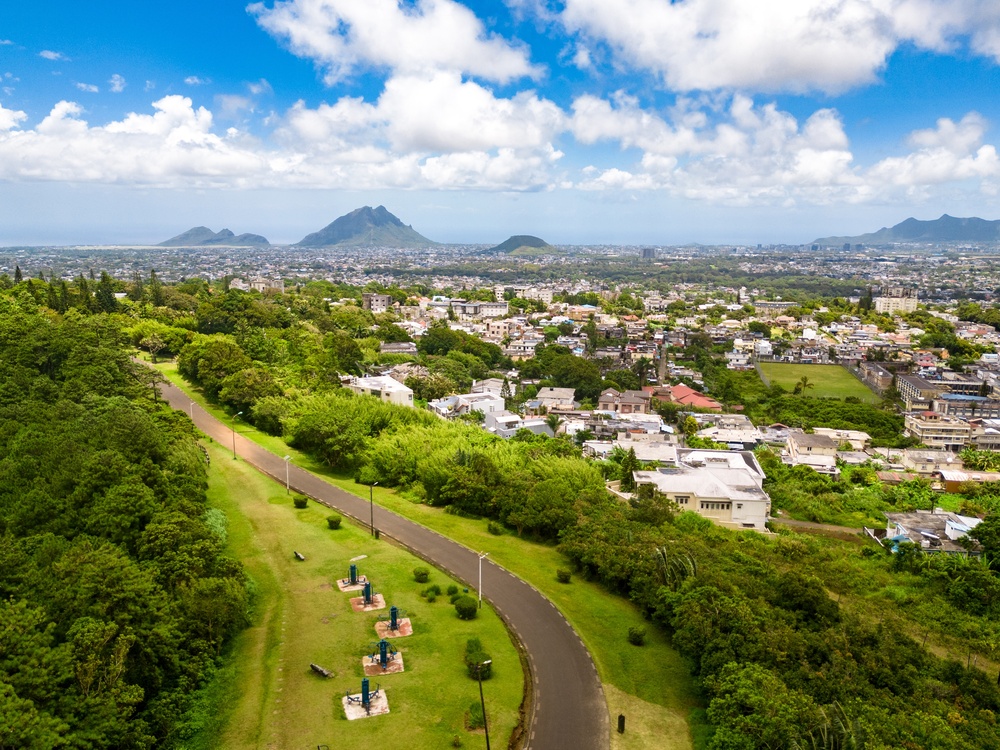
Mauritius offers far more than beaches and seaside resorts. In Chamarel, discover the Mauritian "roots" in a serene pastoral setting. Located between Black River and the Morne peninsula, at 283 meters altitude, the village is an ideal retreat for a natural and cultural escape. But before you arrive, enjoy the views of fields and tropical forest along the scenic route. You can stop at numerous spots to capture memorable photos of your getaway.
Main Attractions in Chamarel
For a small village, Chamarel has much to show its visitors. You can stay with a local family to immerse yourself, but above all, take time to discover the picturesque surroundings. Nature has shaped many wonders throughout the region.
Head to the Land of Seven Colors to admire one of the planet's greatest geological curiosities. Nestled in a clearing not far from the village, it unfolds like a small park of multicolored dunes. The dunes display various shades of red, orange, yellow, and violet—prepare your camera, for you're looking at one of Mauritius's most photogenic landscapes.
For nature lovers, the location also features the famous waterfall fed by the Saint-Denis and Viande-Salée rivers. It drops approximately 100 meters. This is a place worth prioritizing for those seeking an enjoyable day out. It is indeed possible to swim in it. You can observe it head-on from the path to the Land of Seven Colors park—a parking area allows you to stop, and a small dirt path along with several viewpoints offer you the chance to capture incredible photographs.
There is also the leisure park, Chamarel Adventure Park, for those wanting to stretch their legs. Spanning about 12 hectares, it is nestled within a tropical forest home to various endemic plants.
Finally, with the Chamarel Rum Distillery, Mauritius reveals to you a treasure other than nature: rum. Situated amid sugarcane and exotic fruit plantations, the facility offers guided tours to learn more about the artisanal production of this precious elixir, with a tasting at the end.
Gastronomy and Art in Chamarel
Chamarel and its surroundings have become highly sought-after tourist destinations. To satisfy travelers, numerous guesthouses and a few small restaurants have opened here. Your excursion will give you the opportunity to taste local cuisine with Creole influences. Here, dishes are prepared in the finest Mauritian tradition. At dinner, treat yourself to fresh seafood caught during the day. Try zourite (octopus) during the season. Chicken curries also promise an explosion of flavors.
Chamarel is home to a few artists and artisans who are very open to exchange. It is a major center of Rastafarianism, so don't hesitate to strike up a friendly conversation with the village's authentic Rastas. They will be delighted to explain their way of life.
Practical Information
Climate in Chamarel
Chamarel enjoys a savanna climate with a dry winter, classified as type Aw on the Köppen-Geiger scale. The region experiences significant rainfall, with average precipitation reaching 1,652.6 mm per year. A light shower is always possible even during the driest month. Temperature-wise, the thermometer shows an average temperature of 21.8°C throughout the year.
When to Visit?
According to Köppen-Geiger, Chamarel has a savanna climate with a dry winter. It is a city with significant rainfall. This means that even during the driest months, there can be considerable rain, and precipitation is greater in summer than in winter.
The average temperature in Chamarel is 28.1°C and average precipitation is 1,652.6 mm. For a pleasant vacation, favor the months of June, July, August, September, October, and November. Other months are still possible, but you should always consider the activities you wish to do during your stay.
There are four ways to get from Port-Louis to Chamarel. You can take a bus, taxi, train, or rental car. By car, you need 52 minutes to reach your destination.
Renting a car is an option for those who want more ease during the journey. A means of transport to prioritize for travelers with children. You can stop wherever you like for a short break or simply admire the landscapes lining Mauritian roads.
What to Do in Chamarel?
- Visit the Land of Seven Colors: this place offers visitors a rare geological natural spectacle. It is a formation of small colored earth dunes. The location is especially stunning at sunrise and sunset. To visit, you will need to pay an entrance fee. The area is surrounded by barriers to protect it from human activity.
- Admire the Chamarel Waterfall: this slice of paradise can be admired from a promontory. Its waterfalls, more or less powerful depending on the season, cascading 100 meters high are truly impressive. You can descend if you wish to swim or enjoy other viewpoints.
- Visit Curious Corner: this is an engaging museum located just across from the Land of Seven Colors. Once in front of the building, you'll surely notice the car embedded in the wall. It is a curious place specializing in trompe-l'oeil and optical illusions. Within this 5,000 m² space, you can see more than 40 truly magical exhibits.
- Head to the Chamarel Rum Distillery: on the return route toward the village of Chamarel, you'll find an agricultural facility offering guided tours in multiple languages. You'll learn about rum production, sugarcane harvesting, and fermentation and distillation. What makes it special is that it was designed from the outset to respect the environment and welcome tourists. To complete the tour, you can taste 6 different rums. Thanks to its shop, you can even purchase some if you wish to take home a souvenir**.**
Want to discover this destination?
Our local advisors design your tailor-made trip.