Centre and Plateau
Mauritius's central plateau, between 400 and 600 metres, concentrates the island's Creole and Indian memory, its basaltic peaks and its 1770 botanical garden.
The centre of Mauritius forms a gently domed plateau between 400 and 600 metres above sea level, resting on the island's volcanic bedrock. When we climb there from Port-Louis via the M1, in just twenty minutes the temperature drops by 4 to 5 degrees and the air becomes denser. It was here, on the heights of Curepipe, Floréal, Moka and Vacoas, that British colonists relocated their residences in the 19th century to escape the malaria of the coasts. This history explains today's distinctive urban fabric: wooden Creole houses, colonial gardens, casuarina-lined avenues, and a climate that sometimes feels more like a highland station than a tropical island.
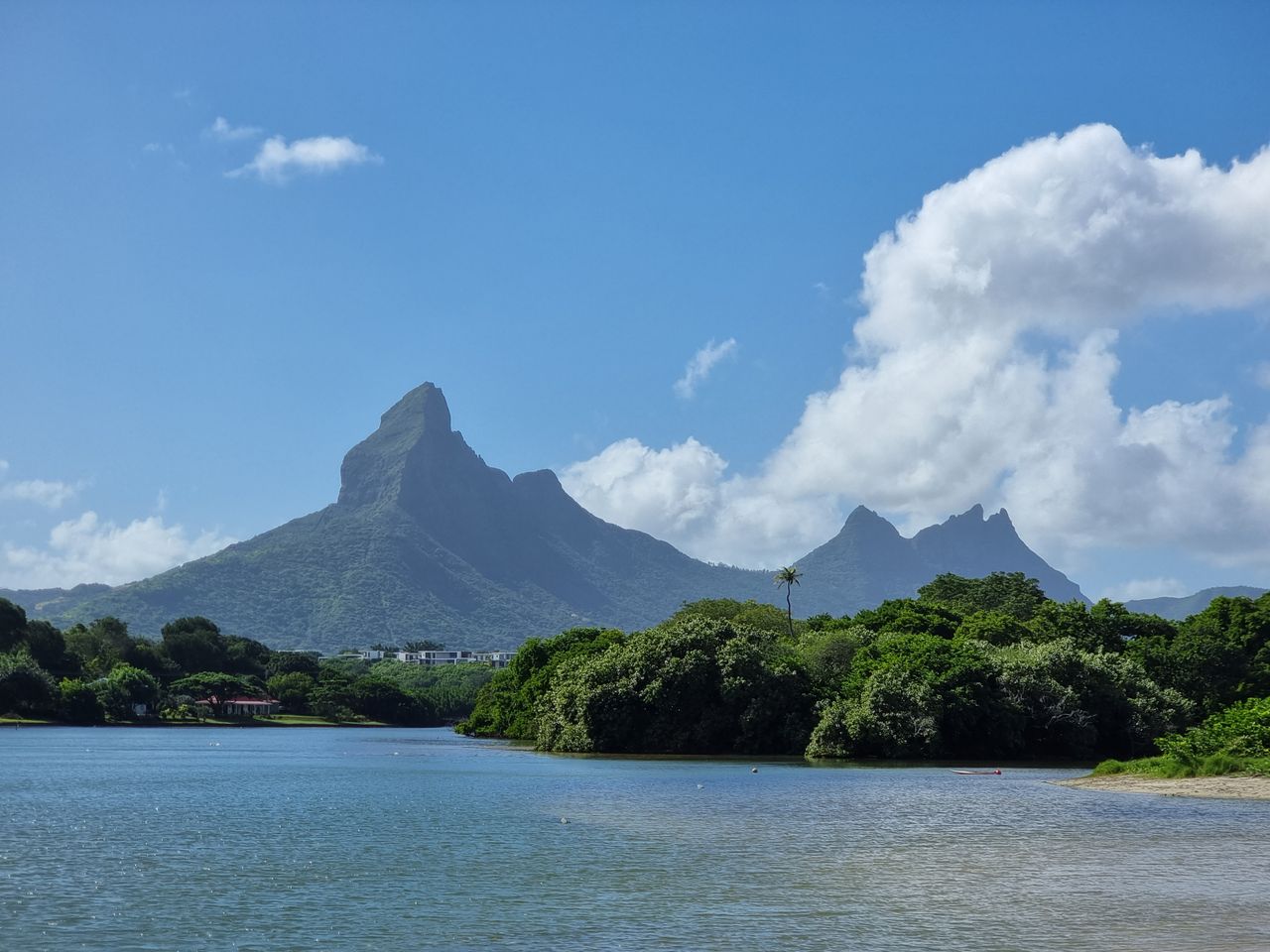
The plateau holds the country's economic and administrative backbone. Port-Louis, capital and historic port, spreads at the foot of the north-western heights, dominated by the stepped silhouette of Pieter Both, the island's second peak at 820 metres with its characteristic basalt sphere at the summit. A few kilometres south, Moka houses the university, several corporate headquarters and former planters' estates like Eureka, an 1830 Creole mansion open to visitors, with its 109 doors and windows designed for ventilation. Higher still, Curepipe and its former volcanic crater, the Trou aux Cerfs—200 metres deep and 1 kilometre in circumference—offers from its ridge a 360-degree view over the entire centre.
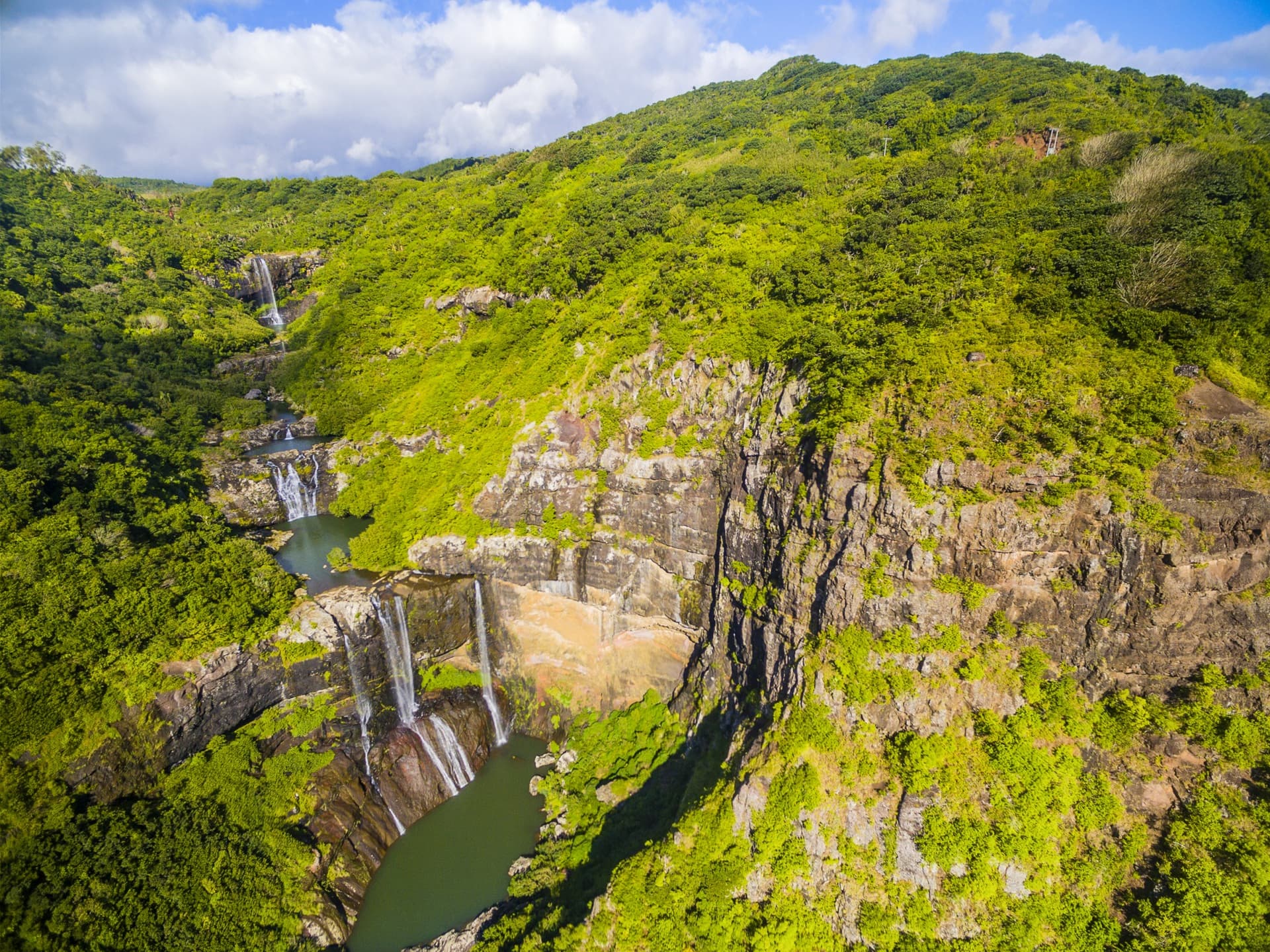
Rainfall here is distinctly heavier than on the west coast: Curepipe records nearly 4 metres of water annually, compared to 800 mm at Flic en Flac. This moisture has shaped dense vegetation of Chinese guavas, tree ferns and eucalyptus. It has also enabled the establishment, at 760 metres altitude, of Black River Gorges National Park, whose Petrin entrance lies at the southern edge of the plateau. Pamplemousses Botanical Garden, founded in 1770 by Pierre Poivre at the northern rim, displays over 650 species across 37 hectares: talipot palms that flower once every 60 years before dying, giant water lilies Victoria amazonica in their basin, an avenue of spices and baobabs.
The centre is also the heart of Mauritian memory. In Port-Louis, the Aapravasi Ghat, UNESCO-listed, is the landing point through which nearly half a million indentured Indian workers passed between 1834 and 1920, after the abolition of slavery. An hour away, on the south-west coast but accessible from the plateau, Morne Brabant holds the memory of the maroons. This dual history, Indian and African, crossed with French and Chinese heritage, is read in the Tamil temples of Triolet, the pagodas of Port-Louis, the Creole churches of Moka. Port-Louis central market opens from 5:30am: warm dholl puri, gato pima, vegetable pickles are sold there, and spices arrive from the Quatre-Bornes Bazaar on Tuesdays and Sundays.
For hikers, the centre concentrates the majority of the island's trails. Besides Pieter Both and Trou aux Cerfs, the Corps de Garde above Quatre-Bornes (720 m) takes 3 hours return, and Le Pouce (812 m), the third peak, is tackled from Moka village in 4 hours. The views from these basaltic ridges offer a clear reading of the island's geography: you see the turquoise lagoon to the east and west, and the patchwork of sugarcane fields that still covers nearly 40% of the territory.
It is this density—urban, historical, geological and botanical—that makes the central plateau compelling. It is not visited for its beaches, which it lacks, but to understand what Mauritius is beyond the postcard image of beach paradise.
To discover
Trou aux Cerfs crater in Curepipe. A dormant former volcano 200 metres deep, encircled by a panoramic road. The walk takes 20 minutes and offers 360-degree views over the plateau and the Moka range.
Pamplemousses Botanical Garden. Thirty-seven hectares planted since 1770, featuring the giant water lilies Victoria amazonica capable of supporting a child, talipot palms and the avenue of spices. Allow 2 hours, ideally in the morning.
Aapravasi Ghat and Port-Louis market. The UNESCO landing point of indentured workers can be visited in an hour, then head to the central market open from 5:30am for dholl puri, gato pima and pickles. A morning to grasp Mauritian cultural fusion.
Climbing Pieter Both or Le Pouce. Two basaltic peaks above 800 metres. Le Pouce takes 4 hours return from Moka, Pieter Both requires fixed ropes on the final section and a local guide.
Eureka Creole mansion in Moka. A planter's residence from 1830, with its 109 doors and windows, period furnishings and garden descending towards the Moka river and its waterfalls. Creole restaurant on-site for lunch.
When to go
The central plateau has its own climate, cooler and damper than the coasts. From May to October, Mauritius's dry season, temperatures in Curepipe range between 13 and 22 degrees, versus 20 to 28 on the coast. Evenings are cool, a jumper is necessary. This is the best period for hiking: dry trails, clear visibility from the peaks. From November to April, the hot and humid season, the plateau receives most of its annual rainfall, with frequent showers in late afternoon and temperatures around 18 to 25 degrees. January and February concentrate cyclone risk.
For visiting gardens and historical sites, any time of year suits as long as you accept the possibility of a shower. For high-altitude hikes, we recommend June to September, setting out early in the morning before orographic clouds form and typically cover the peaks after 11am.
Practical advice
The centre merits 2 to 3 days to go beyond flying visits. One day for Port-Louis and Pamplemousses, one day for Moka, Eureka and Trou aux Cerfs, one day for a hike to Le Pouce or Corps de Garde. SSR airport to the south-east is 45 minutes from Curepipe, Port-Louis port 30 minutes via the M1 motorway which crosses the plateau. This is therefore a logistically central region, easily combined with any coast.
We suggest dedicating time here early in your stay to understand the country before heading to the beaches, or late in your stay as a transition before your return flight. Natural combination with the West Coast for the plateau-lagoon contrast, with the Wild South via the Plaine Champagne forest road, or with the North and Grand Baie for beach-based travellers making day excursions. Comfort is adequate in guesthouses in Moka and Curepipe, but the plateau has no resorts: travellers seeking all-inclusive will sleep on the coast. Ideal region for contemplatives, hikers, colonial history enthusiasts and families with curious children.