North and Grand Baie
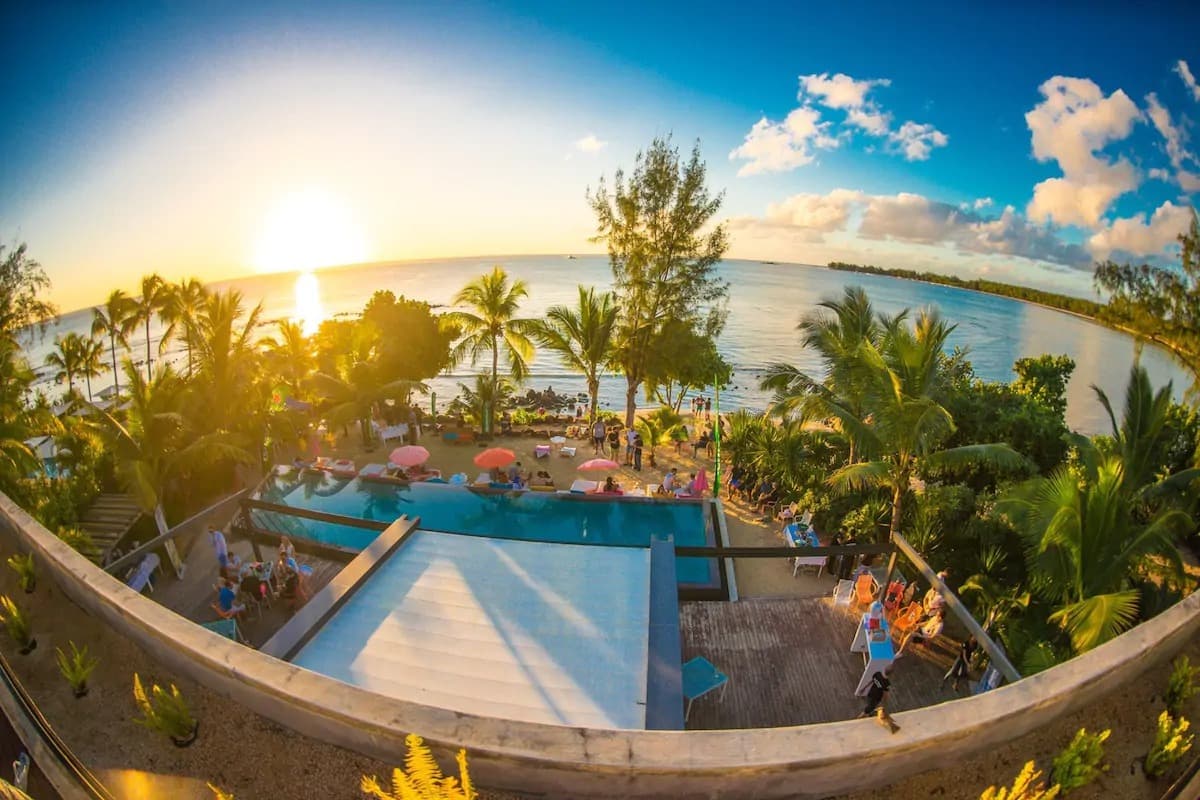
The island's most vibrant region, an ideal beach base with a sheltered lagoon, islets accessible by catamaran and Creole restaurants in Grand Baie.
The north of Mauritius forms a low coastal plain opening onto the country's most extensive lagoon. From Port-Louis, the capital where our agency is based, it takes 45 minutes by car on the M2 motorway to reach Grand Baie, which has become the island's main beach resort over the past thirty years. The region encompasses a coastal strip of roughly twenty kilometres between Balaclava to the west and Cap Malheureux at the northern tip, with sugarcane fields of the Pamplemousses district inland.
Grand Baie itself is organised around a deep bay where catamarans and fishing boats moor. Royal Street concentrates most of the activity: Creole restaurants, Sino-Mauritian tables, dholl puri and chilli cake vendors. North of the village, Pereybère remains quieter with its public beach framed by casuarina trees. Cap Malheureux, a former fishing hamlet, is recognisable by the small Notre-Dame-Auxiliatrice chapel with its red tin roof, facing the Northern islets. It was from this point that the English landed in 1810 to seize the island from the French.
The northern lagoon shelters three white sand beaches that stretch continuously: Trou aux Biches, Mont Choisy and Grand Baie bay. Depth rarely exceeds two metres for several hundred metres offshore, making it an ideal playground for families and inexperienced swimmers. The coral reef lies distant, more than a kilometre out in places, and keeps the waters calm even when the trade wind blows strongly on the east coast.
Offshore, four islets punctuate the horizon. Coin de Mire, a basaltic mass of 162 metres, is a nature reserve off-limits to landing but circumnavigated by catamarans. Île Plate with its small lighthouse, and Île Gabriel, welcome day trips: snorkelling on coral formations, grilled Creole lunch on the beach, swimming in crystalline waters. Île aux Serpents, despite its name, shelters only seabirds; the name likely comes from its elongated shape on old maps.
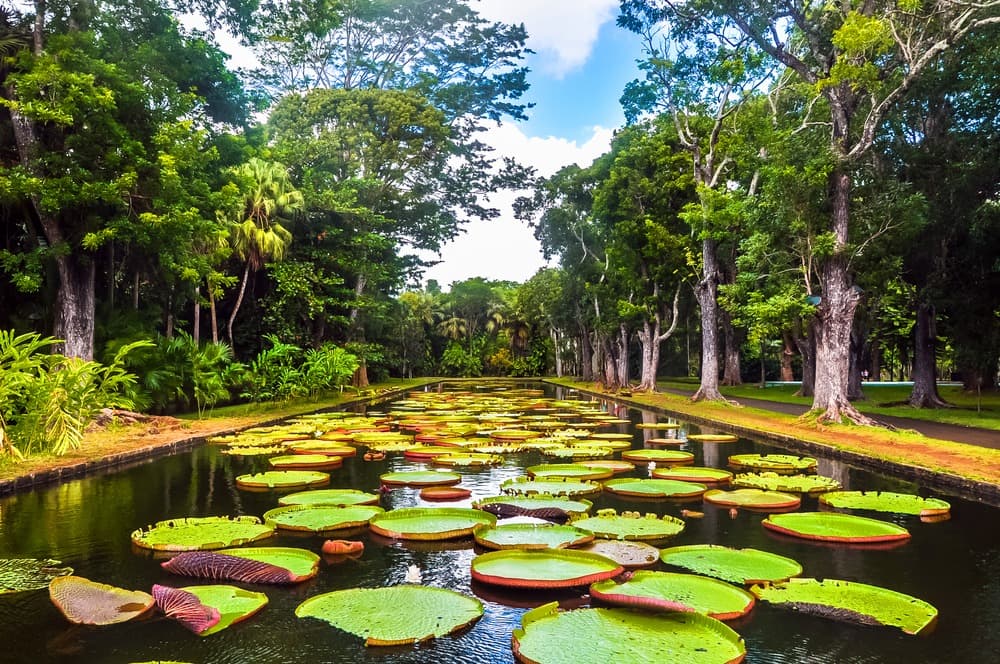
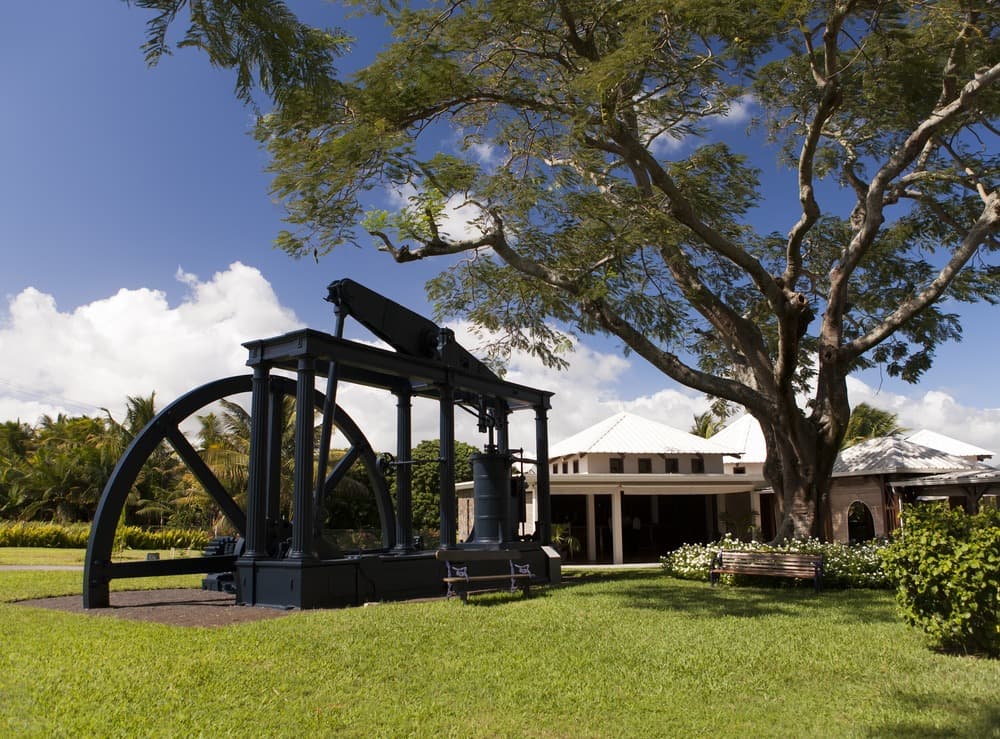
The inland area merits a half-day visit. The Pamplemousses Botanical Garden, created by Pierre Poivre in the eighteenth century, preserves a collection of palms and the famous giant water lilies Victoria amazonica, whose leaves exceed one metre in diameter. The Labourdonnais rum distillery in Mapou offers tastings of rums infused with vanilla and coffee. And the restored colonial residence of Château de Labourdonnais provides concrete insight into the sugar economy that shaped the north of the island.
At the table, grilled fish and octopus curries dominate evening menus along Royal Street and the coastal road. Sino-Mauritian cuisine is also well represented, a legacy of nineteenth-century Cantonese immigration: fried noodles, overturned bowls, steamed dumplings served in small establishments in Grand Baie. It is the most densely equipped region in hotels, restaurants and shops on the island, making it a logical base for a first week.
To discover
Catamaran to the Northern islets. Day trip from Grand Baie or Trou aux Biches to Île Plate, Île Gabriel and Coin de Mire. Snorkelling on corals, grilled food on the sand, return by sail late afternoon.
Red chapel at Cap Malheureux. Small wooden church with a scarlet tin roof, positioned facing Coin de Mire. Late afternoon light is particularly sharp when the trade wind clears the clouds.
Pamplemousses Botanical Garden. Created in 1770, it houses more than 80 varieties of palms and the giant water lily pool. Guided tour recommended to understand Pierre Poivre's role in introducing spices.
Mont Choisy and Trou aux Biches beaches. Three kilometres of white sand edged with casuarina trees, shallow and calm lagoon. Ideal for families with young children or for a day without logistics.
Royal Street in Grand Baie at dinner. Creole, Sino-Mauritian and Indo-Mauritian tables lined up over 800 metres. Grilled captain fish, fried noodles with beef, infused rums to end the meal.
When to go
The north is the driest and warmest region of the island. The best period extends from May to November, the southern winter: temperatures of 22 to 27°C during the day, lagoon water around 24°C, moderate trade wind that cools the evenings. September and October offer the calmest sea and best underwater visibility, around 20 metres at the islet dive sites.
From January to March, the southern summer brings heat (30 to 33°C), high humidity and cyclone risk. Showers are brief but intense, sometimes 80 to 100 mm in a day. This period remains viable for swimming (water at 28°C) but we advise against catamaran outings over five to seven days in case of weather alert. December and April are often pleasant transition months. Unlike the central highlands, the north never drops below 18°C at night, making it a comfortable base year-round.
Practical advice
Three to five nights are sufficient to enjoy the north without rushing: a catamaran day, a half-day at Pamplemousses and Château de Labourdonnais, two beach days and an evening in Grand Baie. SSR Plaisance airport, to the southeast, is 1 hour 15 minutes away; we systematically arrange transfers. The region combines well with the West Coast for dolphins and diving at Flic en Flac, the Centre and plateau for Rivière Noire Gorges park, and the East Coast for a contrast of wilder and less developed landscapes.
The comfort level is the highest on the island: hotels in all categories, villa rentals, restaurants open late, supermarkets, private clinics. It is the base we recommend to families with children, first-time visitors and travellers seeking a balance between beach relaxation and varied outings without excessive driving. Those preferring calm and untamed nature will instead favour the Wild South or Rodrigues.